All work
Shopify store · A UK homeware, garden and furniture retailer · Ongoing
Darthome
A Shopify store for a UK homeware retailer, with custom sections built into its theme and orders flowing into BusinessTools.
Visit the site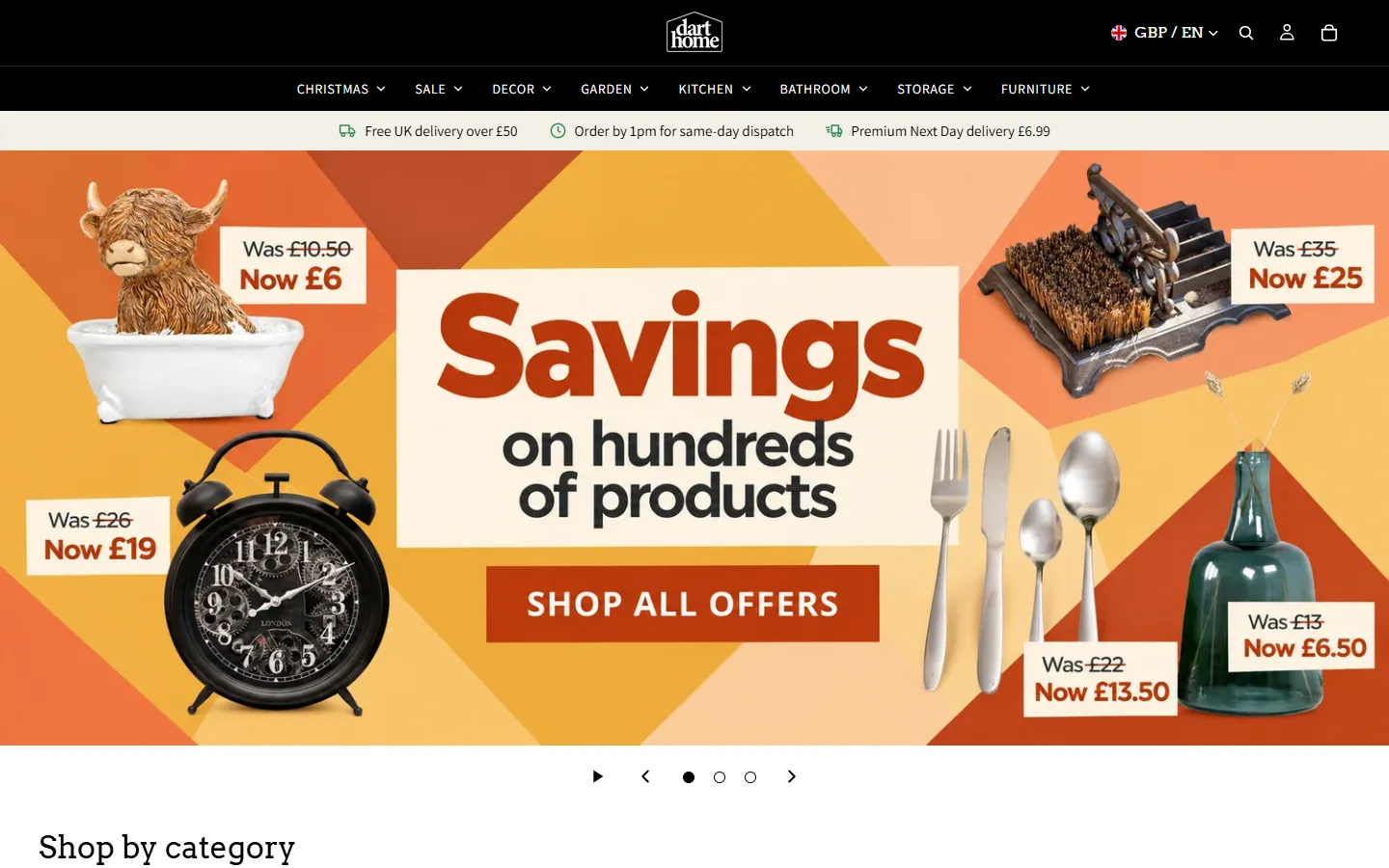
The brief
Darthome sells homeware, garden accessories, kitchenware and furniture online, with frequent offers and seasonal ranges.
What I built
- The store on Shopify, built on the Dwell theme.
- Custom sections written for the theme, which the shop’s staff can arrange in Shopify’s editor:
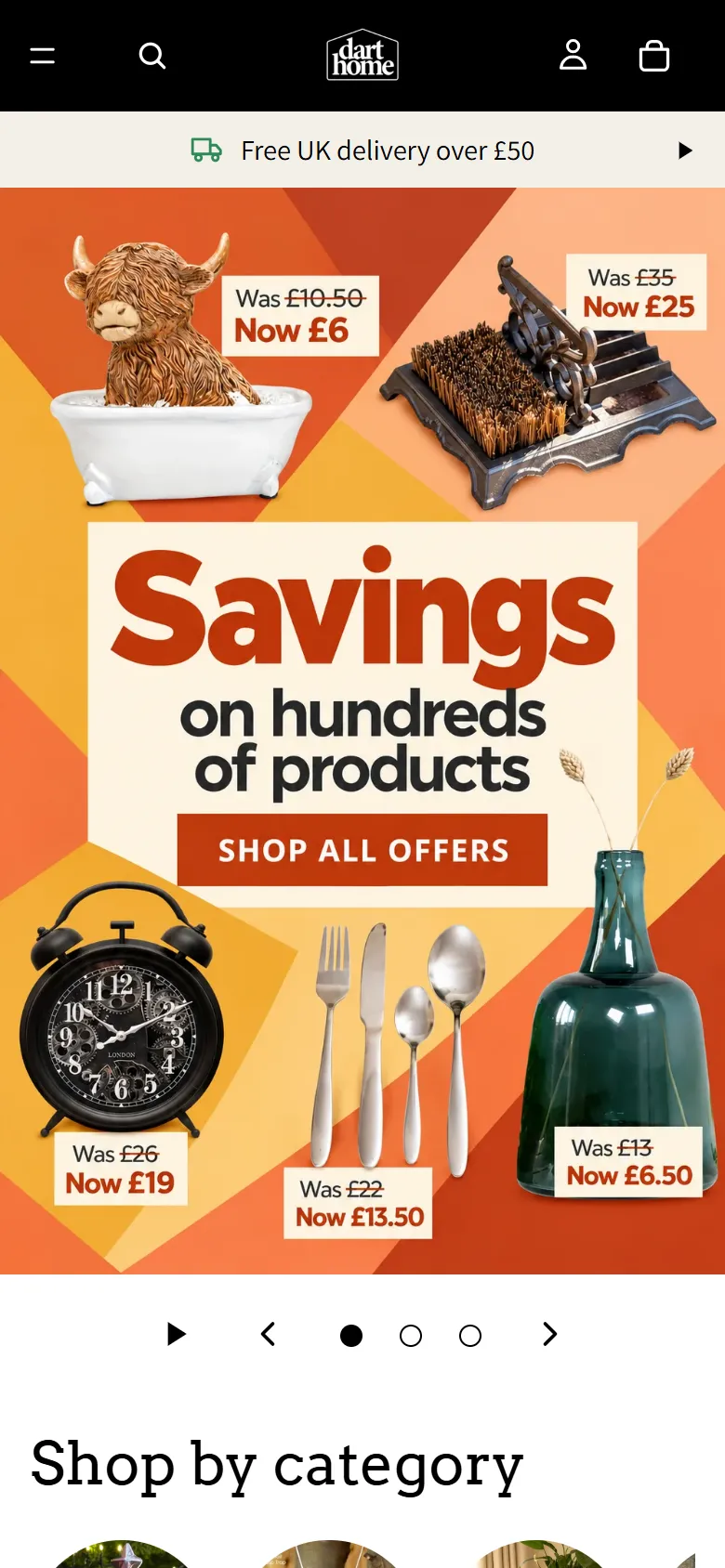
- a home page with plenty to browse: a slideshow, rows of category, room and seasonal pictures, a sale banner and product rows;
- a strip of delivery promises under the header, worded from the shop’s own delivery settings;
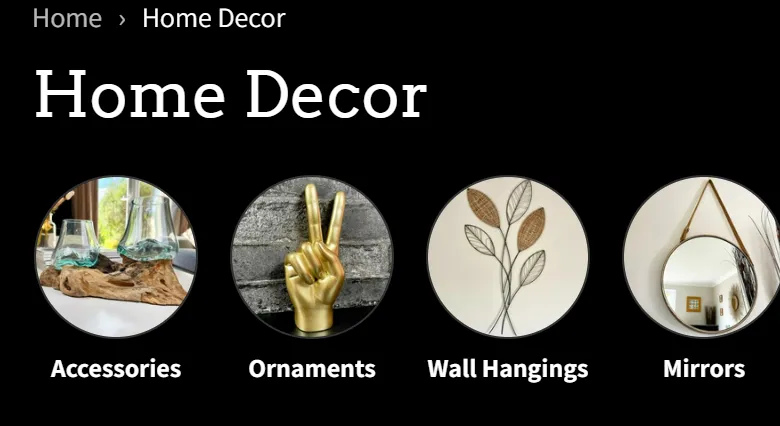
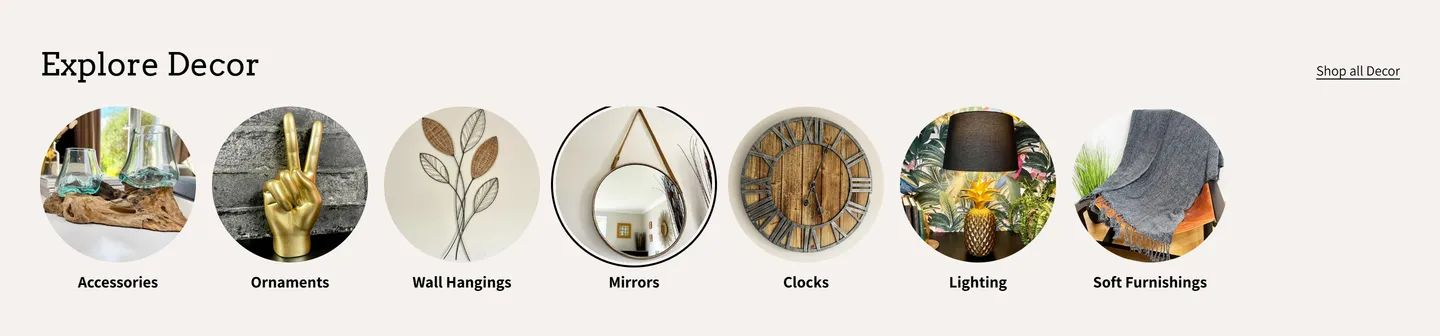
- a header for each collection: a trail back to the home page, which search engines read too, the collection’s name as the main heading, and its categories as round pictures and chips, taken from the shop’s main menu;
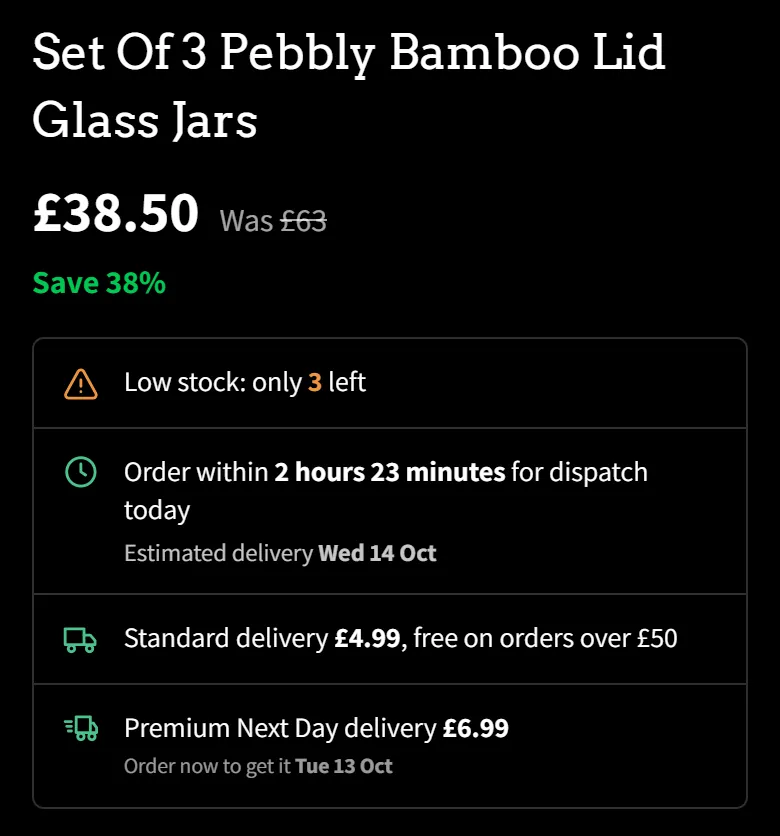
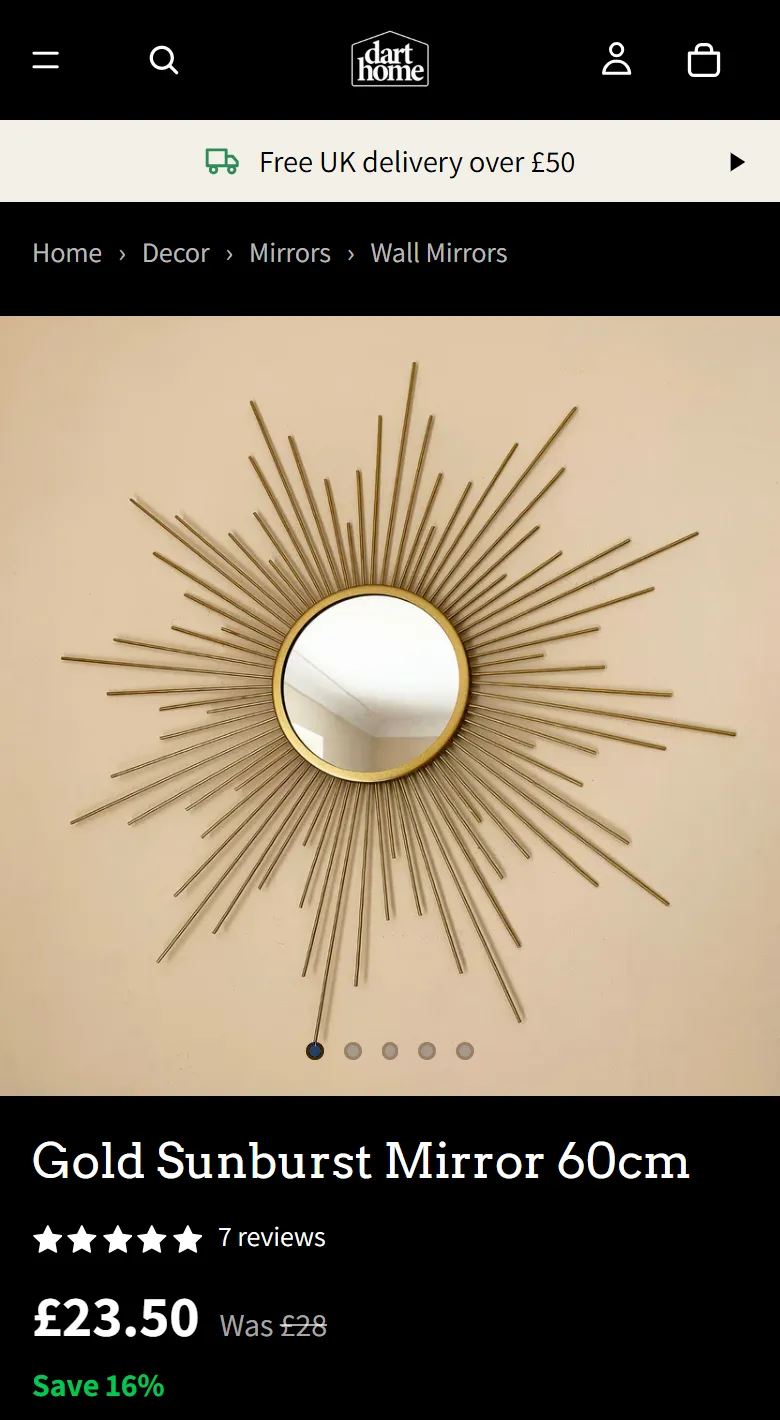
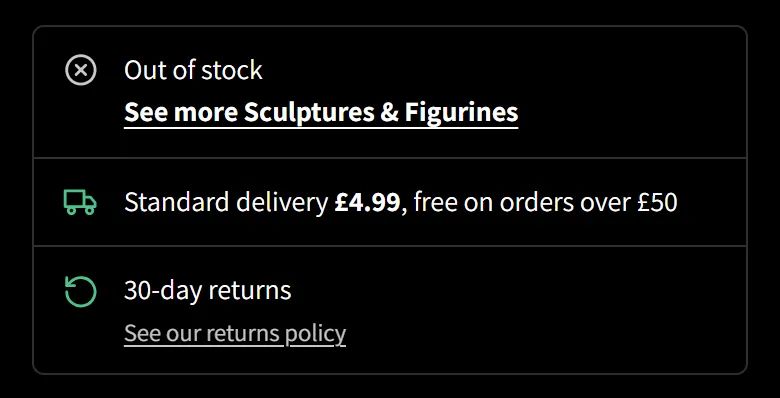
- on product pages, a price that shows the saving whenever something’s on offer, and a delivery panel: live stock counts, a dispatch countdown - “Order within 2 hours 23 minutes for dispatch today” - with an estimated delivery date, and the delivery prices for the visitor’s basket. The countdown keeps UK time wherever the visitor is, and knows about weekends and bank holidays;
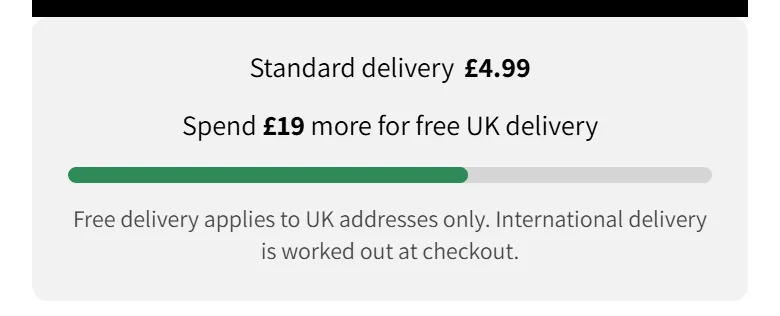
- in the basket and the basket drawer, a bar that shows how much more to spend for free delivery;
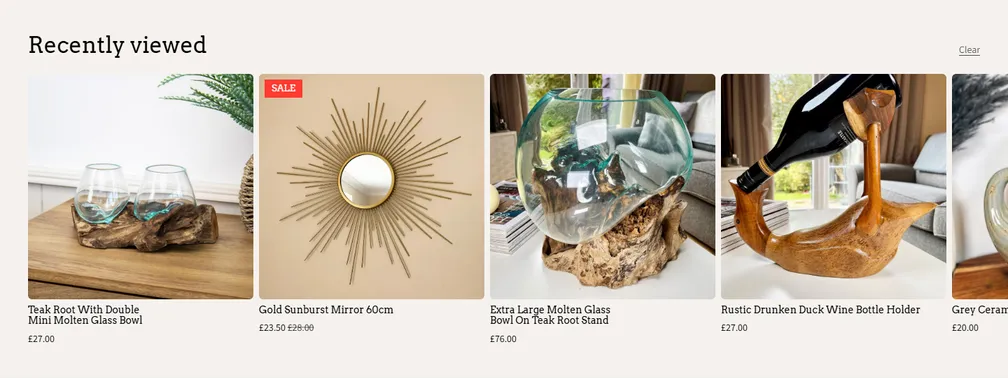
- a “Recently viewed” row in the shop’s own product cards, on product pages, in the basket and above the footer everywhere else. It remembers a visitor’s last products for 60 days, and has a Clear link;
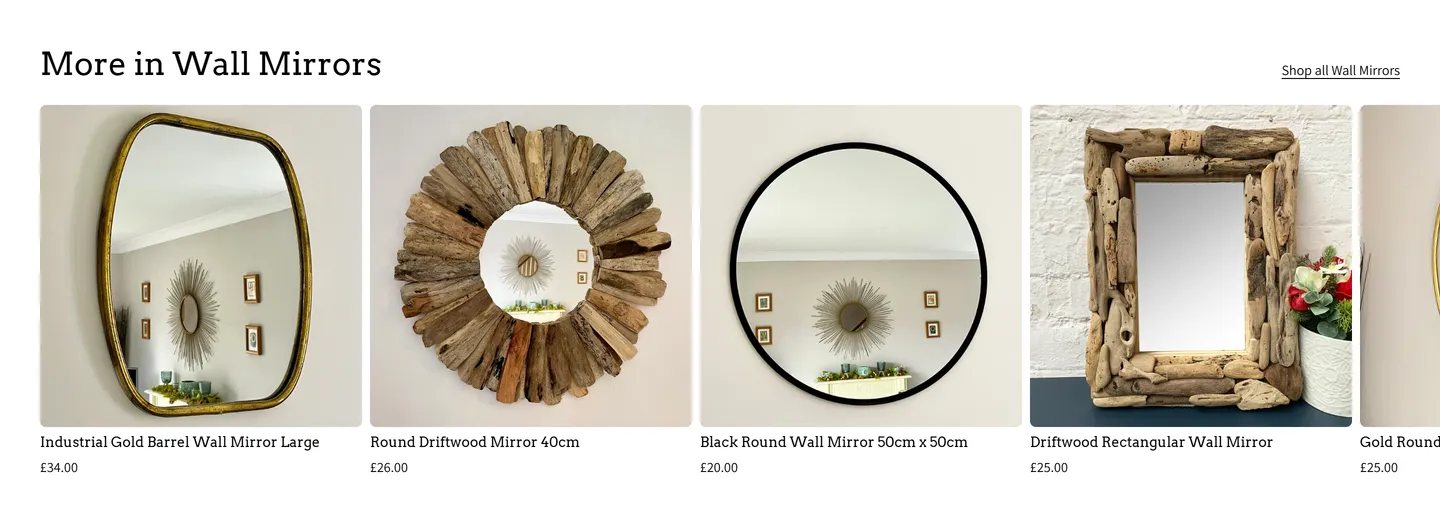
- on product pages, a way on for visitors who arrive from a search: a trail back through the shop’s categories (which search engines read too), more from the product’s own category, and the rest of its department as pictures. Each product is placed in the shop’s menu automatically, so it keeps up as products and the menu change, and sold-out products point to alternatives in stock;
- in the delivery panel, the returns window, and for products with reviews, their rating in the data search engines read, so Google can show the stars;
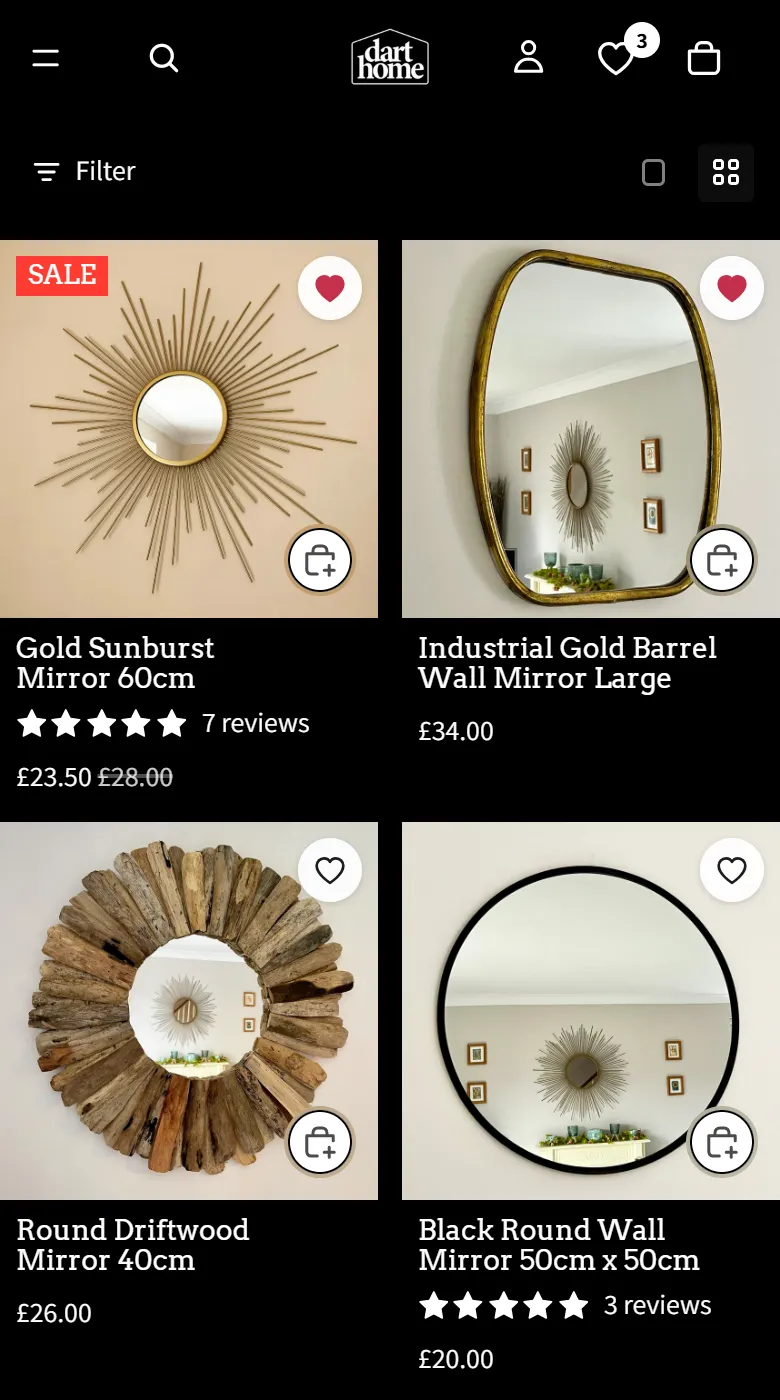
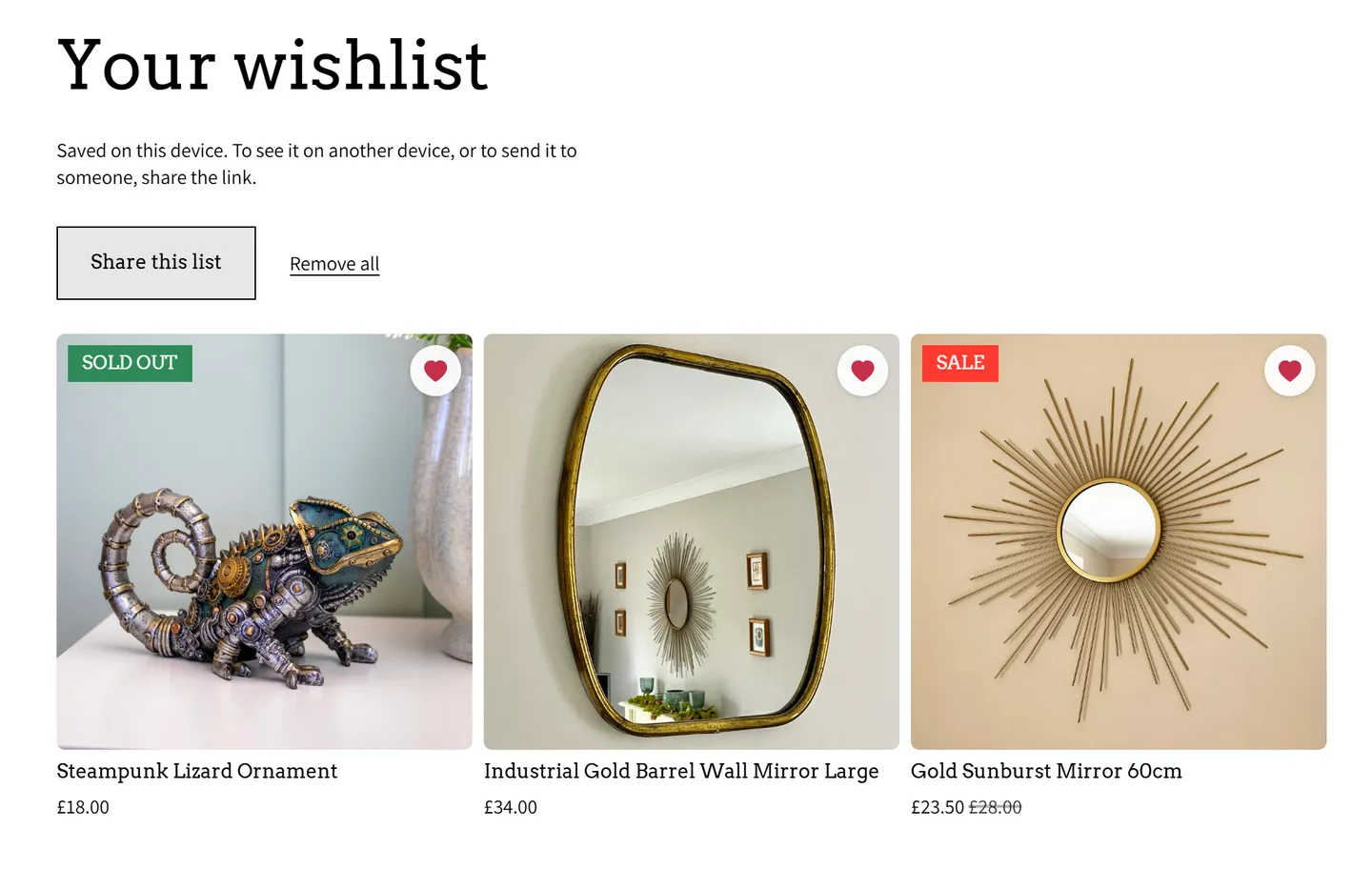
- a wishlist without an app: a heart on every product saves it to a list kept in the shopper’s own browser, with no account needed, and the wishlist page shows the shop’s own up-to-date product cards, with a link to share the list with family or open it on another device;
- a footer with a sign-up band on every page, the shop’s categories in a column the menu keeps up to date, and only the nine payment logos a UK shopper expects, down from fifteen.
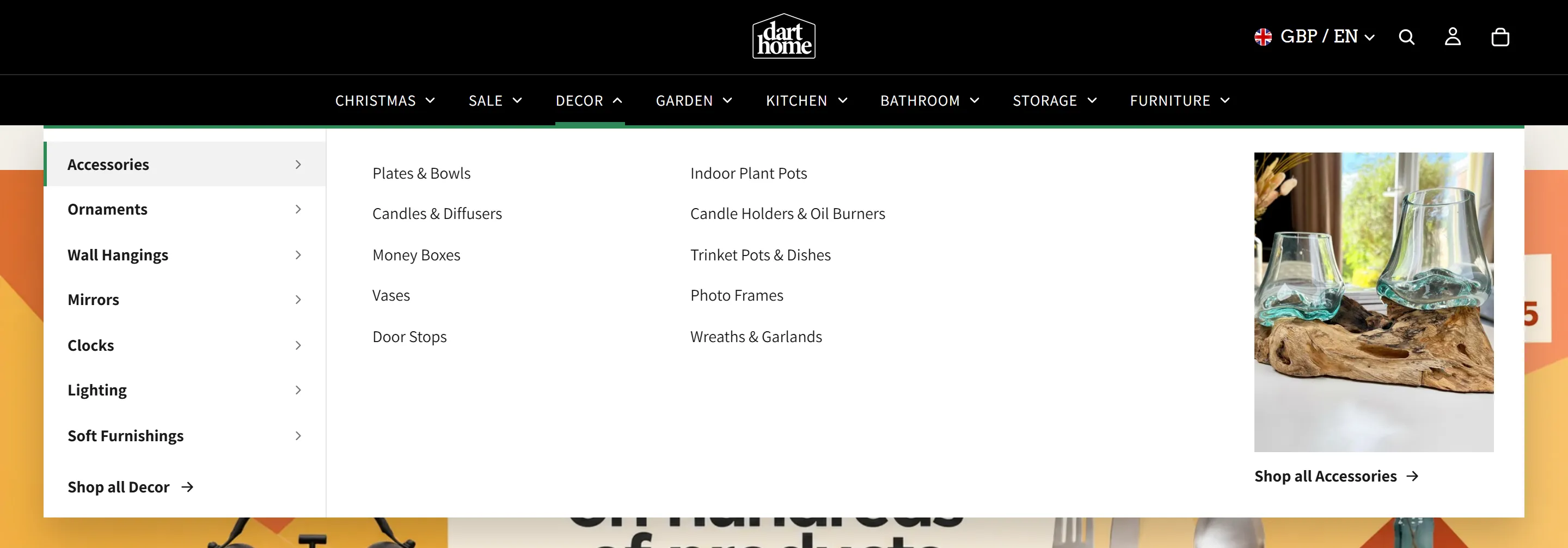
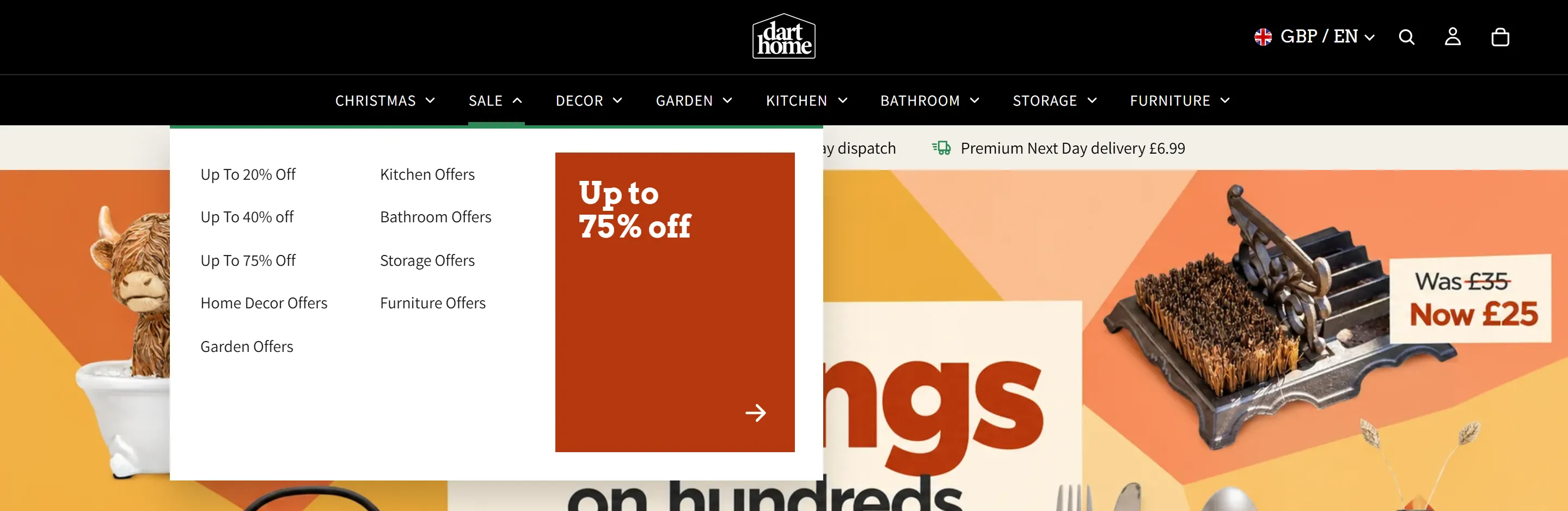
- A menu bar for a 167-link menu: on desktops, the shop’s own Shopify menu as a black bar under the logo. Some departments hold dozens of categories in groups and others only a few, so each drop-down takes the shape it needs: the biggest list their groups down the left, with the chosen group’s categories and photo beside them; Sale’s offers sit beside an offer card; Furniture is a short list. A drop-down opens after a short pause on hover (so moving across the bar doesn’t make it flicker), on a click or tap, or from the keyboard, and phones keep the theme’s menu button.
- Checked on the live store: automated tests run against Shopify’s own pages - a visitor in New York at fixed times, sold-out and low-stock products, baskets on either side of free delivery - so a theme change can’t quietly break them.
- Straight into the warehouse: every order flows into BusinessTools, the warehouse system I co-developed, for picking, packing and dispatch.